
A tool to help you experiment with AI
By

Hoch Cho

Commercial real estate servicers have unique challenges in using AI because of strict data privacy policies. While professionals at servicing companies may use Large Language Models (“LLMs”) for research or marketing copy, most do not and cannot use LLMs for one of their most valuable use cases: the abstraction of data from documents. In other words, if you get a long insurance policy, it sure would be nice to pull out all the needed information from it.
Most people have dropped a PDF policy into Microsoft Copilot and asked for basic policy answers. The results weren’t outstanding because the user asked the LLM to do too many tasks at once. Servicing professionals haven’t experimented, not from a lack of curiosity, but rather because privacy policies prevent them.
At Firehorse we believe playing around with LLMs is the best way to understand AI. You have to understand it to make a Build vs. Buy decision. Obviously, if you Build, you need to understand it intimately, and if you Buy, you need enough knowledge to evaluate different vendors.
We’ve built diymyai.com to help you experiment. This mini-Agent splits the data abstraction task into two. First, the mini-Agent converts the PDF into text using OCR. Then it passes that text to an LLM to abstract data. This two-step process significantly increases the accuracy.
It takes about 15 minutes to create your own site and run your first document. We also recommend using a structured JSON prompt (we provide an example). This is so the data returned by the LLM is structured so that you can use it in code afterward.
If you don’t know how to create a structured prompt, describe the situation (don’t give it any data) and ask the free ChatGPT, Claude, or Grok in the browser to create a structured prompt for you. There is no data privacy required here. Everyone is using structured prompts to abstract data, so you wouldn’t be giving these companies anything they don’t already have.
Experiment with prompts. Ask LLMs to help you create various prompts. See what works and what doesn’t. Ask it about context windows, lost in the middle or barbell problems, and negation problems.
You’ll find that diymyai will work well with natural language (insurance policies, the remarks page of ACORDs), simple tables (some invoices and receipts but not all), and not very well with complex tables and checkmarks (the first page of ACORDs). In fact, just by changing the prompt, you can abstract data from any document in any industry (the Fannie and Freddie manual or a passage from Pride & Prejudice, one of my favorite books).
How can you use the structured output in your very own app in a secure way? We’ll answer that in the next blog.
If you are a small shop and this is good enough for you, then feel free to take the code and website, move it off our domain, ask Claude Code to whip you up some more software (after you read blog part 2), and host it yourself. You can use the same AWS account. No need to move it. You will generate 30–40% time savings on policies without a problem.
All you need is an adventurous person on your business team (the one who is using new-fangled functions in Excel, has dabbled with Power Query, or is always buying gadgets or fixing up go-karts) or one in your technical group. Honestly, the coding agents have gotten so good that even us normies can do it with a little bit of effort. I personally like to code things while watching football on TV.
The trial AWS account gives 1,000 pages of Textract free a month. Thereafter, it costs a fraction of a penny per page. The cost of the LLMs selected in diymyai is also a fraction of a penny per page. Please Google to see exact costs.
We’ve created a workspace completely in your own cloud environment. Data never leaves. We can’t see it, nor can anyone else.
We’ve chosen services within AWS which state that they do not retain data. OCR is done using the AWS Textract synchronous API, which immediately deletes data.* LLMs are run on AWS Bedrock, which also immediately deletes data. Note that the output from each service is saved onto your own storage (S3) in your own AWS account.
We think the bare minimum is what the companies say, or the Terms of Service. You have to read carefully though. For example, the Sonnet models on AWS Bedrock do not retain data while the same models on Azure do for “safety” purposes. While stated intention is important, we also underwrite the business model of each service using the following variables:
Profitability. New GPU chips at AWS and Azure are at a 1.5 year payback. Older chips from 2 years ago (likely what the lesser models on Bedrock run on) are at a 6–9 month payback. In other words, AWS Bedrock is an extremely profitable business line. AWS Textract is a machine learning model where almost all the development was done years ago. It’s also very profitable. Amazon has more to lose by giving data to model providers, and so we believe they’ll make the rational decision and hew faithfully to their Terms of Service. Frontier AI companies, however, provide services through their API at a huge discount and may not even be gross margin positive. This lack of profitability increases the risk that they won’t adhere to their Terms of Service and may monetize the data somehow.
Business viability. Even if a company has the best of intentions, running out of money can compromise data. We real estate folks know what judges can do to leases and contracts in bankruptcy. It’s no different with tech companies. Look up 23andMe to see what a buyer is doing with DNA information! There’s also a thriving business buying the data assets of defunct tech companies. I trust AWS is going to stay in business. Not so sure about the frontier AI labs.
History. AWS Textract has been used for over 7 years by HIPAA-compliant companies, the US government, banks, etc., with nary a squeak or whisper of a problem. Bedrock has been used for 3 years with a similar profile. Frontier labs, on the other hand, have swiped content from the internet, Reddit, The NY Times, and Disney. They’ve suffered massive data leaks and security breaches. They’ve been caught distilling data from each other and have produced the entire first Harry Potter book word for word based on a prompt.
Who are you going to trust more? Not saying you shouldn’t trust frontier labs, but I am saying you probably should trust AWS.
If you’re in the Commercial Servicing business and want moral support while creating your own AI space, feel free to ping us and we’ll help you. If you’ve done it yourself, either with or without our help, and are excited with the results and want to share, definitely ping us. We love talking about the wonderful things these models can do.
*The AWS website is ambiguous on whether this Textract data is used for training. The AWS chatbot says no for synchronous API calls. We also believe it is no because they delete the data immediately. Regardless, if the data is used to train, it is for OCR only, not semantic meaning. One way we know this is how bad Amazon’s own LLMs are. If they were training on Textract data, they’d have much better AI models.
See more articles

CRE Inspections
The MBA Inspection Form Update Is Old News. The Enforcement Isn’t.
Property inspection reporting for commercial and multifamily loans changed in 2025.
By
Jon Falker
Vertical AI Agents
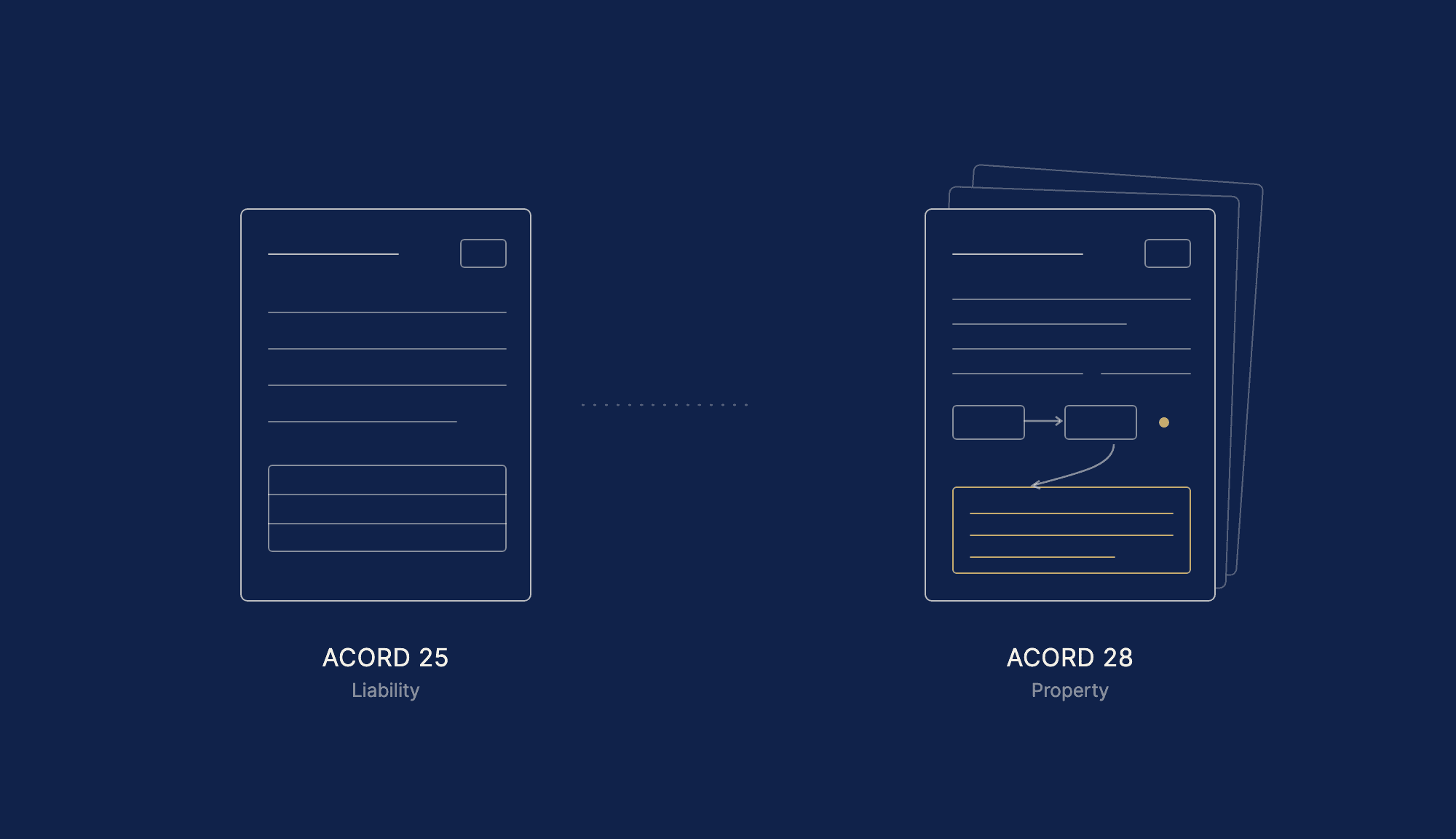
Why do AI and Document Processing Companies Love the ACORD 25?
Have you ever wondered why all case studies & blogs on commercial property insurance compliance feature the ACORD 25, but never the 28?
By
Hoch Cho

Copyright © 2026 | Firehorse Group LLC